
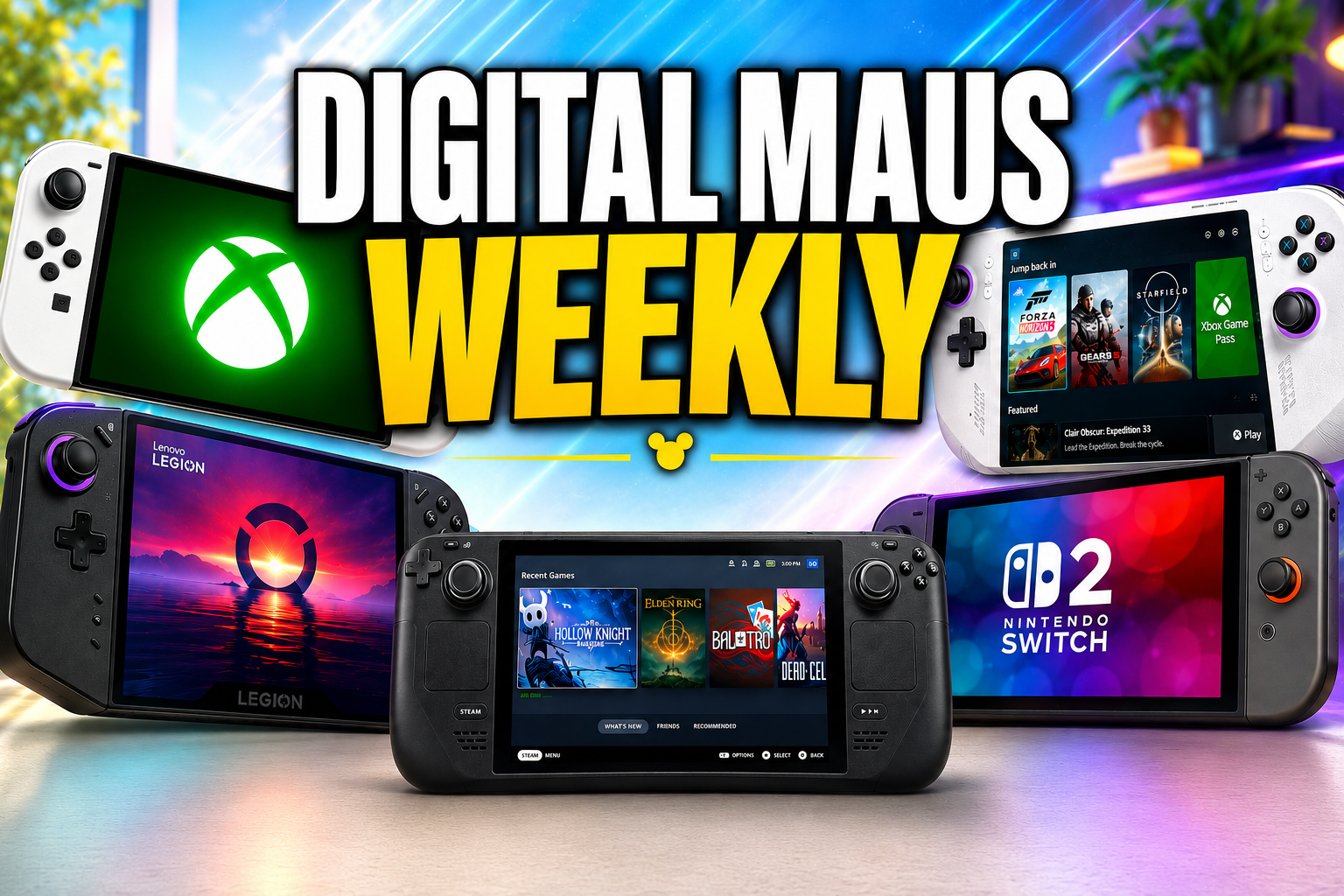
This week’s handheld gaming news focused on increasingly expensive premium hardware, the continuing effect of component shortages, and new devices aimed at both modern PC gaming and retro enthusiasts. You can also check out my YouTube channel for more handheld gaming content: https://www.youtube.com/@digitalmaus
ASUS Plans a Standalone Release for the OLED ROG Xbox Ally X20
ASUS has confirmed that it is discussing a standalone release for the OLED ROG Xbox Ally X20, which was originally expected to be sold only as part of a bundle with AR glasses. The new handheld features a 7.4-inch 1080p OLED display with a 30–120Hz variable refresh rate, anti-glare glass, and peak brightness of up to 1,400 nits. The Verge praised the screen’s clarity, along with the redesigned rubberized grips, quieter buttons, improved cooling, and adjustable four-way or eight-way D-pad. The MSI Claw 8 EX AI+ produced substantially higher frame rates in early comparisons, but the Ally X20 delivered quieter operation and more consistent frame pacing in some games. Pricing and a release date have not been announced, although it will likely cost more than the current $1,000 ROG Xbox Ally X. The announcement matters because ASUS appears to be positioning the X20 as a premium alternative built around comfort, display quality, and refinement rather than raw performance alone.
APA citation: Hollister, S. (2026, July 14). The OLED Xbox Ally X20 is so good, Asus will sell it solo. The Verge. https://www.theverge.com/games/965123/asus-rog-xbox-ally-x20-oled-preview
MSI Claw 8 EX AI+ Delivers Major Performance at a $1,800 Price
Wired reviewed the MSI Claw 8 EX AI+, a high-end Windows handheld powered by Intel’s new Arc G3 Extreme graphics architecture. The device includes 32GB of LPDDR5x memory, a 1TB SSD, an 8-inch 1920 × 1200 IPS display with 120Hz variable refresh rate, and an 80Wh battery. Performance was one of its strongest qualities, with games such as Marvel’s Spider-Man Remastered reaching between 90 and 120 frames per second when Intel XeSS was enabled. The reviewer also praised its ergonomics, Hall effect controls, haptics, and comfortable weight distribution, despite the device weighing 785 grams. However, the $1,800 price, 90-minute battery life during demanding games, repeated Windows updates, and buggy MSI software prevented it from earning an unqualified recommendation. The review shows that handheld performance is improving quickly, but pricing and software quality are becoming just as important as benchmark results.
APA citation: Kamen, M. (2026, July 15). MSI Claw 8 EX AI+ review: Great power, shocking price. Wired. https://www.wired.com/review/msi-claw-8-ex-ai/
AYANEO Teases the Game Boy Advance-Inspired Konkr Pocket Advance
AYANEO has teased a new retro handheld called the Konkr Pocket Advance. The announcement describes the device as a tribute to a handheld that defined an earlier era of portable gaming, strongly suggesting inspiration from the original Game Boy Advance. AYANEO did not initially reveal the complete design or detailed specifications, so the exact screen, processor, controls, and price remain unknown. The device will be released under Konkr, AYANEO’s brand intended to offer more affordable handheld products than its flagship systems. GamesRadar noted that the Pocket Advance will need competitive pricing, reliable availability, a modern display, and controls that preserve the feel of the original Game Boy Advance. The announcement matters because AYANEO may be preparing to compete more directly with affordable retro handheld manufacturers such as Anbernic.
APA citation: Hayton, P. (2026, July 10). “This time, we pay tribute to a true icon”—Ayaneo teases the OG Game Boy Advance remake I’ve been waiting for. GamesRadar+. https://www.gamesradar.com/hardware/retro/this-time-we-pay-tribute-to-a-true-icon-ayaneo-teases-the-og-game-boy-advance-remake-ive-been-waiting-for/
AI-Driven Component Costs Push Up Super Pocket Prices
Blaze Entertainment announced price increases for its Super Pocket retro handhelds and Evercade cartridges in the United Kingdom and Europe. Super Pocket systems will rise from £49.99 or €59.99 to £59.99 or €69.99, while Evercade cartridges will increase from £19.99 or €24.99 to £24.99 or €29.99. Blaze CEO Andrew Byatt said the company had absorbed higher manufacturing, component, and freight costs but could no longer continue doing so. Memory and flash-storage prices were identified as major contributors, with demand from AI data centers affecting component availability across the electronics industry. Prices in the United States will remain unchanged for now because recent tariff reductions helped offset some of the increased costs. The increase is significant because it shows that component pressures are affecting not only premium Windows handhelds and the Steam Deck, but also lower-cost retro gaming devices.
APA citation: Hayton, P. (2026, July 10). Blaze’s affordable Super Pocket handheld has been hit with a price hike due to AI component demand. GamesRadar+. https://www.gamesradar.com/hardware/retro/blazes-affordable-super-pocket-handheld-has-been-hit-with-a-price-hike-due-to-ai-component-demand-despite-absorbing-rising-costs-across-manufacturing-components-and-freight-for-as-long-as-possible/
SteamOS Continues to Gain Ground, but Windows Remains Dominant
Acer published a comparison examining whether PC gamers should switch from Windows 11 to SteamOS or another Linux-based gaming setup. The article reports that Linux has risen from less than 2 percent of Steam users in early 2024 to approximately 4 percent in 2026, placing it consistently ahead of macOS. Some of that growth is coming from desktop users installing Linux rather than solely from Steam Deck and SteamOS handheld sales. SteamOS remains appealing for handhelds because it offers a controller-friendly interface, streamlined sleep and resume features, and fewer desktop distractions than Windows. Windows still provides broader compatibility with game launchers, anti-cheat systems, Xbox Game Pass, mods, and general PC applications. The comparison matters because SteamOS is becoming a legitimate alternative across more handheld devices, but Windows continues to be the safer choice for players who prioritize complete software compatibility.
APA citation: Acer Corner. (2026, July 16). SteamOS vs. Windows 11 for gaming in 2026: Should you switch?https://blog.acer.com/en/discussion/4476/steamos-vs-windows-11-for-gaming-in-2026-should-you-switch
What This Means
The biggest handheld gaming trend this week was the growing divide between hardware capability and affordability. ASUS and MSI are delivering better displays, stronger performance, and more refined designs, but premium handheld pricing is moving well beyond traditional console territory. At the same time, rising memory and storage costs are beginning to affect even budget retro systems. SteamOS may help manufacturers create a more streamlined experience, but neither operating-system improvements nor performance gains can completely offset the pressure of higher hardware prices.