
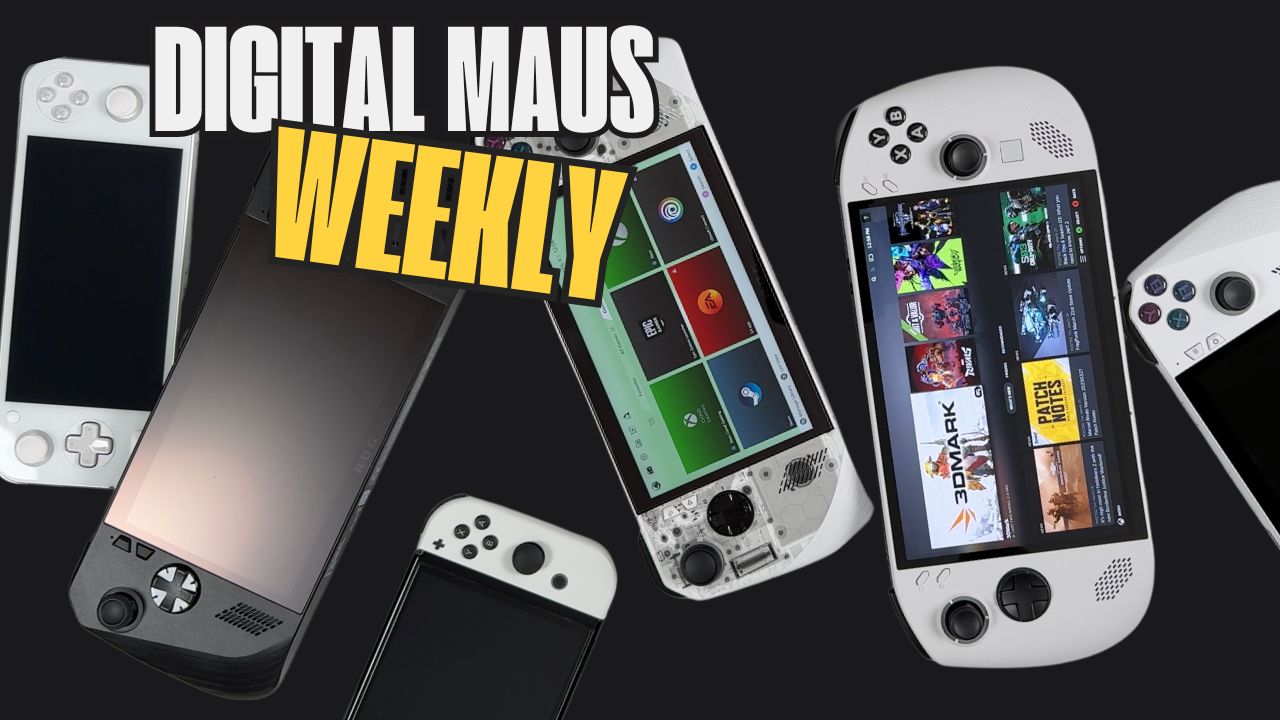
April 3, 2026 – April 10, 2026
A weekly roundup of handheld gaming news covering Steam Deck vs Windows, ROG Ally performance, Switch 2 expectations, Xbox platform changes, and the evolving handheld PC market.
You can also check out my YouTube channel for more handheld gaming content: https://www.youtube.com/@digitalmaus
Steam Deck vs Windows Handhelds (The Verge)
The article examines how SteamOS compares to Windows on handheld gaming PCs. It focuses on devices like the Steam Deck OLED versus Windows-based competitors. The Verge highlights SteamOS for its simplicity, better battery optimization, and console-like experience, while criticizing Windows handhelds for fragmented UI and setup friction. Windows is still praised for broader compatibility and flexibility across game libraries. This matters because it reinforces that the biggest difference in this space isn’t hardware—it’s the user experience, which directly influences buying decisions.
APA Citation:
Warren, T. (2024). The Steam Deck shows why Windows still struggles on handheld gaming PCs. The Verge. https://www.theverge.com/2024/2/12/24070755/steam-deck-windows-handheld-gaming-pcs-comparison
ROG Ally Long-Term Review Update (IGN)
This article revisits the long-term experience of using the ASUS ROG Ally after extended use. IGN evaluates how the device performs in real-world conditions beyond initial benchmarks. The Ally is praised for strong performance and versatility, but ongoing criticism centers on Windows usability, updates, and occasional instability. It continues to feel more like a portable PC than a console-style experience. This matters because it highlights the ongoing tradeoff between power and convenience, which remains a key factor for buyers.
APA Citation:
Lada, J. (2024). ASUS ROG Ally Review (Updated 2024). IGN. https://www.ign.com/articles/asus-rog-ally-review
Nintendo Switch Successor Expectations (Polygon)
This article discusses expectations surrounding the successor to the Nintendo Switch. Polygon focuses on how Nintendo may position its next device in a market now filled with more powerful handheld PCs. There is speculation around improved performance, potential NVIDIA-based features, and backward compatibility, though nothing is officially confirmed. The tone reflects cautious optimism rather than hype. This matters because Nintendo’s next device will likely be judged directly against handheld PCs, not just traditional consoles.
APA Citation:
Carpenter, N. (2024). What we expect from Nintendo’s next console. Polygon. https://www.polygon.com/24050000/nintendo-switch-2-rumors-release-date-specs
Handheld PC Market Growth & Fragmentation (LaptopMag)
This article explores the rapid growth of the handheld PC market and increasing competition. It highlights companies like ASUS, Lenovo, and Valve. LaptopMag notes that while more options are entering the market, the variety is making it harder for consumers to choose. Performance improvements are consistent, but usability varies widely across devices. This matters because it shows the market is maturing, and buyers are prioritizing overall experience and value over raw specifications.
APA Citation:
Hiner, J. (2024). Best handheld gaming PCs in 2024. LaptopMag. https://www.laptopmag.com/gaming/handheld-gaming-pcs
AYANEO & Boutique Handheld Coverage (Kotaku)
This article looks at smaller handheld manufacturers like AYANEO and Anbernic. Kotaku highlights how these companies are experimenting with premium designs and niche features. However, many of these devices are criticized for high prices and limited mainstream appeal. They tend to target enthusiasts rather than general consumers. This matters because it shows the handheld market is splitting into segments, with boutique devices occupying a premium niche rather than competing directly with mainstream options.
APA Citation:
Stanton, R. (2024). The wild world of boutique handheld gaming PCs. Kotaku. https://kotaku.com/ayaneo-handheld-pc-market-anbernic-retro-gaming-1851200000
Xbox Mode on Windows 11 (Windows Central)
This article covers Microsoft’s introduction of a full-screen Xbox-style interface for Windows 11. It focuses on how this feature will improve the experience on handheld gaming PCs and other devices running Windows. The update is designed to make Windows feel more like a console, reducing friction from the traditional desktop interface. It’s positioned as a solution to long-standing usability complaints on devices like the ASUS ROG Ally. This matters because Microsoft is directly addressing the biggest weakness of Windows handhelds—the user experience.
APA Citation:
Warren, T. (2026). Microsoft is bringing an Xbox-style interface to Windows 11 handheld gaming PCs. Windows Central. https://www.windowscentral.com/microsoft/windows-11-xbox-mode-announcement-gdc-2026-project-helix-pc-game-dev
Project Helix – Xbox’s Next Platform Strategy (TweakTown)
This article discusses Microsoft’s broader plan for the future of Xbox, known as Project Helix. It focuses on how Xbox is evolving into a platform that blends console and PC gaming rather than staying a traditional console. The system is expected to support both Xbox and PC titles within a unified ecosystem. Microsoft leadership emphasizes that consoles will still exist, but the ecosystem will expand across devices. This matters because it shows Xbox is shifting toward a platform-first strategy, not just hardware.
APA Citation:
Smith, R. (2026). Xbox consoles will always be around, says Microsoft hardware VP. TweakTown. https://www.tweaktown.com/news/110446/xbox-consoles-will-always-be-around-says-microsoft-hardware-vp/index.html
Xbox Strategy on Handheld Devices (Xbox Wire)
This article outlines Microsoft’s approach to handheld gaming through partnerships rather than building its own device. It focuses on collaborations with companies like ASUS to bring Xbox experiences to Windows-based handhelds. Devices like the ROG Ally X are positioned as examples of this strategy. Instead of competing directly with hardware like the Steam Deck, Microsoft is prioritizing software integration. This matters because Xbox is aiming to expand its ecosystem across existing devices rather than control the hardware itself.
APA Citation:
Microsoft. (2025). Xbox expands its gaming ecosystem with new handheld experiences. Xbox Wire. https://news.xbox.com/en-us/2025/06/08/xbox-handheld-rog-ally-x-games-showcase/
AI Auto Super Resolution on Handhelds (Tom’s Hardware)
This article discusses Microsoft’s rollout of AI-powered upscaling technology for gaming devices. It focuses on Auto Super Resolution, which can improve performance by rendering games at lower resolutions and upscaling them. Early reports suggest performance gains of up to around 30% on supported hardware. The feature is designed to work at the system level rather than requiring individual game support. This matters because it could significantly improve performance and battery efficiency on handheld gaming PCs.
APA Citation:
Frumusanu, A. (2026). Microsoft’s Auto Super Resolution boosts handheld gaming performance with AI. Tom’s Hardware. https://www.tomshardware.com/video-games/handheld-gaming/rog-xbox-ally-x-gaming-handheld-to-get-auto-super-resolution-boost-in-april-microsoft-touts-30-percent-performance-boost-thanks-to-ai-powered-image-upscaling
Rising Hardware Costs & Industry Impact (Wired)
This article looks at rising hardware costs across the gaming industry and how they are affecting pricing. It focuses on broader console pricing trends but has implications for companies like Microsoft and Xbox. Increasing costs for components like memory and storage are driving higher prices for gaming hardware. The article suggests companies may rely more on services like subscriptions to offset these costs. This matters because it helps explain why future Xbox hardware—and handheld devices—may become more expensive.
APA Citation:
Pierce, D. (2025). Rising console prices show this generation is far from over. Wired. https://www.wired.com/story/sonys-ps5-price-hikes-prove-this-console-generation-is-far-from-over-good/