
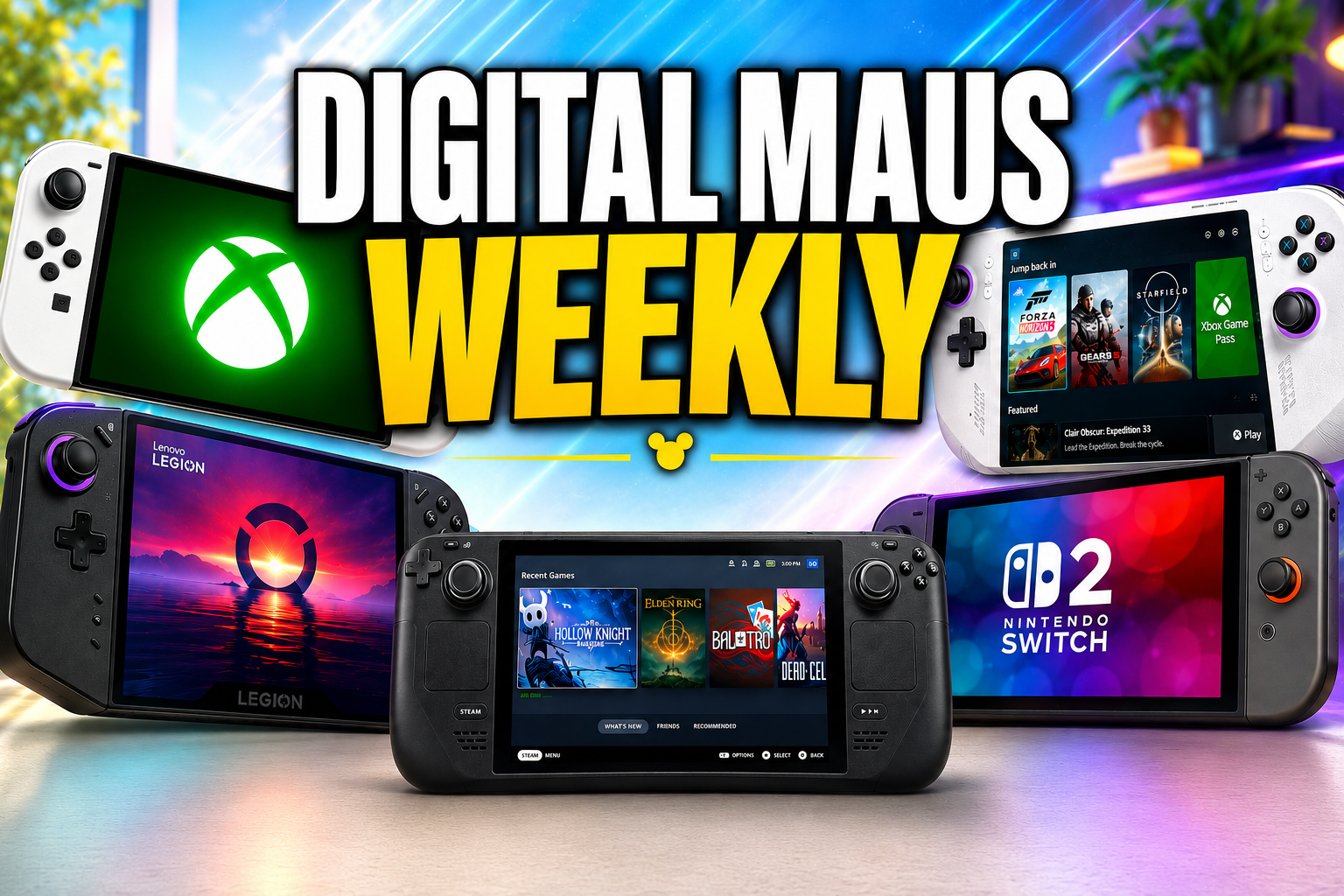
This week brought meaningful changes to handheld gaming, including classic Xbox games arriving on Windows PCs, a sharp estimated decline in Steam Deck sales, and new devices pushing both the affordable and ultra-premium ends of the market. You can also visit the Digital Maus YouTube channel for more handheld gaming content.
Xbox Brings Original Xbox Games to Windows Handhelds
Microsoft has introduced Xbox Backward Compatibility on PC, allowing selected original Xbox games to run officially on Windows computers and handheld gaming PCs. The program begins with Blinx: The Time Sweeper, Conker: Live & Reloaded, Crimson Skies: High Road to Revenge, and Fuzion Frenzy. These games are available through the Xbox PC app, with access included in Xbox Game Pass and support for existing digital licenses on compatible accounts. Microsoft is also improving the games with higher rendering resolutions, anti-aliasing, improved texture filtering, V-Sync, and support for windowed modes. Achievements are expected to be added later, while Xbox Play Anywhere support allows compatible purchases and save data to carry across devices. This matters for handheld gaming because systems such as the ROG Xbox Ally can now provide official access to parts of Xbox’s console history without requiring separate emulators or older hardware.
APA citation: Ronald, J. (2026, July 22). Play more of the games you love, wherever you play with Xbox Backward Compatibility on PC. Xbox Wire. https://news.xbox.com/en-us/2026/07/22/xbox-backward-compatibility-on-pc/
Estimated Steam Deck Sales Fall Sharply
New third-party analysis suggests that weekly Steam Deck sales may have fallen by approximately 82 percent. Boiling Steam used SteamDB chart positions and estimated revenue ranges to calculate that Valve may now be selling between 1,400 and 3,000 Steam Decks per week, compared with an earlier estimate of 11,000 to 18,000. These figures are not official sales numbers from Valve, so they should be treated as estimates rather than confirmed results. The decline follows Valve’s substantial Steam Deck OLED price increase, although the device’s age and growing competition may also be contributing factors. The Steam Deck is now more than four years old, and some buyers may be waiting for a successor rather than paying a premium price for the current hardware. The estimated decline matters because affordability was one of the Steam Deck’s greatest strengths, and losing that advantage gives newer Windows and SteamOS handhelds more room to compete.
APA citation: Hayton, P. (2026, July 22). Steam Deck sales are seemingly down an estimated 82%—Bear with me while I put on my surprised face. GamesRadar+. https://www.gamesradar.com/hardware/handhelds/steam-deck-sales-are-seemingly-down-an-estimated-82-percent-bear-with-me-while-i-put-on-my-surprised-face/
AYANEO Next 2 Reaches More Than $5,000
AYANEO has listed new configurations of its high-end Next 2 Windows gaming handheld, including a top model priced at $5,299. The flagship configuration combines AMD’s Ryzen AI Max+ 395 processor with 128GB of LPDDR5X memory and a 2TB SSD. Less expensive versions remain costly, with a 32GB model starting around $2,999 and a 64GB configuration priced at approximately $3,699. The specifications are closer to those of a high-end workstation than a conventional portable gaming system, raising questions about how much of that hardware can be used effectively in a handheld form factor. AYANEO had previously suspended or adjusted parts of the launch as memory and storage costs increased. The Next 2 demonstrates how some handheld manufacturers are moving beyond mainstream gaming devices and into a specialized luxury category where maximum specifications matter more than accessibility.
APA citation: Ridley, J. (2026, July 20). Think gaming handhelds are too expensive? Ayaneo says “hold my beer,” lists $5,000+ monster. PC Gamer. https://www.pcgamer.com/hardware/handheld-gaming-pcs/think-gaming-handhelds-are-too-expensive-ayaneo-says-hold-my-beer-lists-usd5-000-monster/
Anbernic Introduces a Slimmer RG SP Clamshell
Anbernic has revealed the RG SP, a compact retro handheld inspired by the folding design of the Game Boy Advance SP. The new model uses a 3.5-inch display with a 3:2 aspect ratio, making it better suited to Game Boy Advance games than the 4:3 screens used in some previous Anbernic clamshells. Anbernic has also removed the analog sticks found on the RG34XX SP, producing a cleaner design focused primarily on directional-pad gaming. The body is slimmer than earlier models and is intended to be more convenient for pockets and travel. Important details such as the processor, final price, battery capacity, and complete software support were not included in the initial announcement. The RG SP matters because it shows Anbernic refining an existing design around a more specific use case instead of simply adding more controls or pursuing higher performance.
APA citation: Anbernic. (2026, July 21). First look: Anbernic RG SP brings the classics back in a slimmer form. https://anbernic.com/blogs/news
Valve Restores Steam’s Maximum Game Resolution Options
Valve released a stable Steam Client update on July 21 and issued an additional revision on July 22. The update restored the complete set of choices in Steam’s “Maximum Game Resolution” setting, with additional resolutions now located under a “More Options” submenu. Valve also improved the notification-settings layout in some languages. The July 22 revision corrected a bug that was reducing the efficiency of Steam’s content-delivery system. Although the update is not exclusive to the Steam Deck, Steam’s Big Picture interface and client settings are central to the SteamOS handheld experience. Restoring the missing resolution options gives handheld users more control over how games behave when connected to different displays or when using performance-focused resolution limits.
APA citation: Valve Corporation. (2026, July 21). Steam Client Update: July 21st. Steam Deck. https://www.steamdeck.com/en/news
Splatoon Raiders Launches Exclusively on Switch 2
Nintendo published a new developer interview alongside the July 23 launch of Splatoon Raiders, an exclusive Nintendo Switch 2 game. The interview explores the development team’s decisions and provides additional context about how the new title expands the Splatoon series. Unlike the competitive multiplayer focus most closely associated with the franchise, Splatoon Raiders presents a separate adventure built specifically for Nintendo’s newer hardware. Its Switch 2 exclusivity gives Nintendo another title designed to distinguish the system from the original Switch rather than relying only on enhanced versions of existing games. Nintendo’s developer interviews also provide a more detailed look at design decisions than a standard release announcement. The launch matters because a growing collection of true exclusives will be important as Nintendo works to give existing Switch owners stronger reasons to upgrade.
APA citation: Nintendo. (2026, July 20). Ask the Developer Vol. 22: Splatoon Raiders—Part 2. https://www.nintendo.com/us/whatsnew/ask-the-developer-vol-22-splatoon-raiders-part-2/
What This Means
The largest trend this week is the widening definition of value in handheld gaming. Microsoft is adding value through software and access to older games, while Anbernic is refining inexpensive hardware around a specific retro experience. At the opposite extreme, AYANEO is treating the handheld as a luxury computer with workstation-level specifications. Meanwhile, the estimated decline in Steam Deck sales suggests that even a well-liked operating system and established brand may not overcome aging hardware and a major increase in price.